The Future of Your Reflection: Why AI Hair Replacement is the 2026 Industry Standard
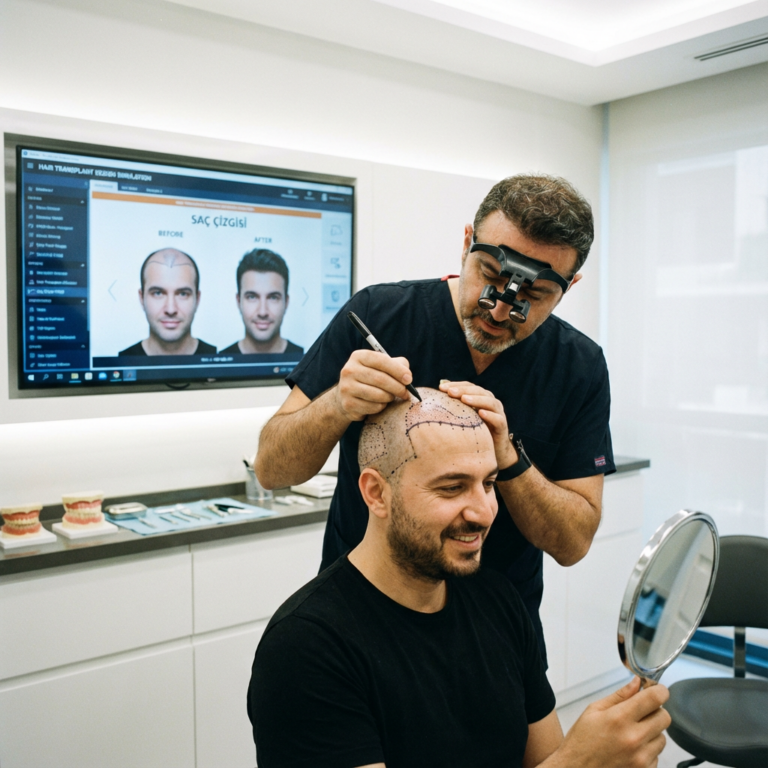
The mirror has always been a source of truth, but in 2026, it has also become a portal for possibility. For decades, the journey of hair restoration was one of “wait and see.” Patients would sit in a consultant’s office, look at photos of strangers, and hope that their own biology would cooperate with the surgeon’s steady hand. Today, that uncertainty has been completely dismantled. The rise of ai hair replacement technology has turned the guesswork of the past into a high-definition, data-driven science. We aren’t just guessing what you’ll look like anymore; we are engineering your future appearance with mathematical precision.
Whether you are a tech CEO in Silicon Valley or a creative professional in London, the decision to opt for ai hair replacement is no longer a hidden secret. It is a strategic choice, much like investing in a high-end wardrobe or a sophisticated skincare routine. By removing the “mystery” from the surgical process, artificial intelligence has empowered thousands of individuals to take control of their aesthetic legacy. It is about closing the gap between the energy you feel inside and the silhouette the world sees on the outside.
1. The Death of Uncertainty: How AI Scans Your Potential
The most significant hurdle in hair restoration has always been the “fear of the unknown.” What if the hairline is too low? What if the density doesn’t match? In 2026, ai hair replacement tools solve these problems before the first graft is ever touched.
3D Cranial Mapping and Symmetry
Every human face follows a unique set of proportions. An ai hair replacement system begins by performing a 360-degree biometric scan of your head. It analyzes your bone structure, the distance between your features, and even the way your facial muscles move when you speak or smile. By processing this data, the AI can suggest a hairline that isn’t just “straight,” but one that is harmoniously aligned with your unique anatomy. This ensures that the results look like “you,” not like a generic template.
Predictive Growth Algorithms
One of the coolest features of modern ai hair replacement is the ability to see into the future. Because hair grows in cycles, the “final” look of a transplant takes about 12 to 18 months to fully mature. The AI can generate a month-by-month time-lapse of your recovery. It accounts for your specific hair texture, color, and even the “silvering” process as you age, showing you exactly how your investment will evolve over the next decade.
2. Why Professionals are Choosing AI-Driven Solutions
In a high-stakes professional environment, appearance is a silent form of communication. Choosing ai hair replacement is a signal that you value precision, technology, and long-term results.
- Robotic Precision: In 2026, many surgeons use AI-guided robotic arms for the extraction and implantation phases. This reduces human fatigue and ensures that every single follicle is placed at the exact angle and depth required for maximum survival.
- Optimized Donor Management: Your “donor area” (the hair at the back of your head) is a finite resource. An ai hair replacement algorithm calculates exactly how many grafts can be moved without thinning out the donor zone, ensuring you have enough “banked” hair for any future needs.
- Invisible Recovery: Because the AI can map out the most efficient surgical path, the trauma to the scalp is minimized. This leads to faster healing times, allowing busy professionals to return to their digital meetings or public appearances within a few short days.
3. The Psychological ROI of Data-Backed Restoration
While the physical results of ai hair replacement are impressive, the mental shift is where the true value lies. Hair loss is often experienced as a slow loss of identity. Reclaiming that identity through a process that feels “scientific” rather than “experimental” provides an immense boost in confidence.
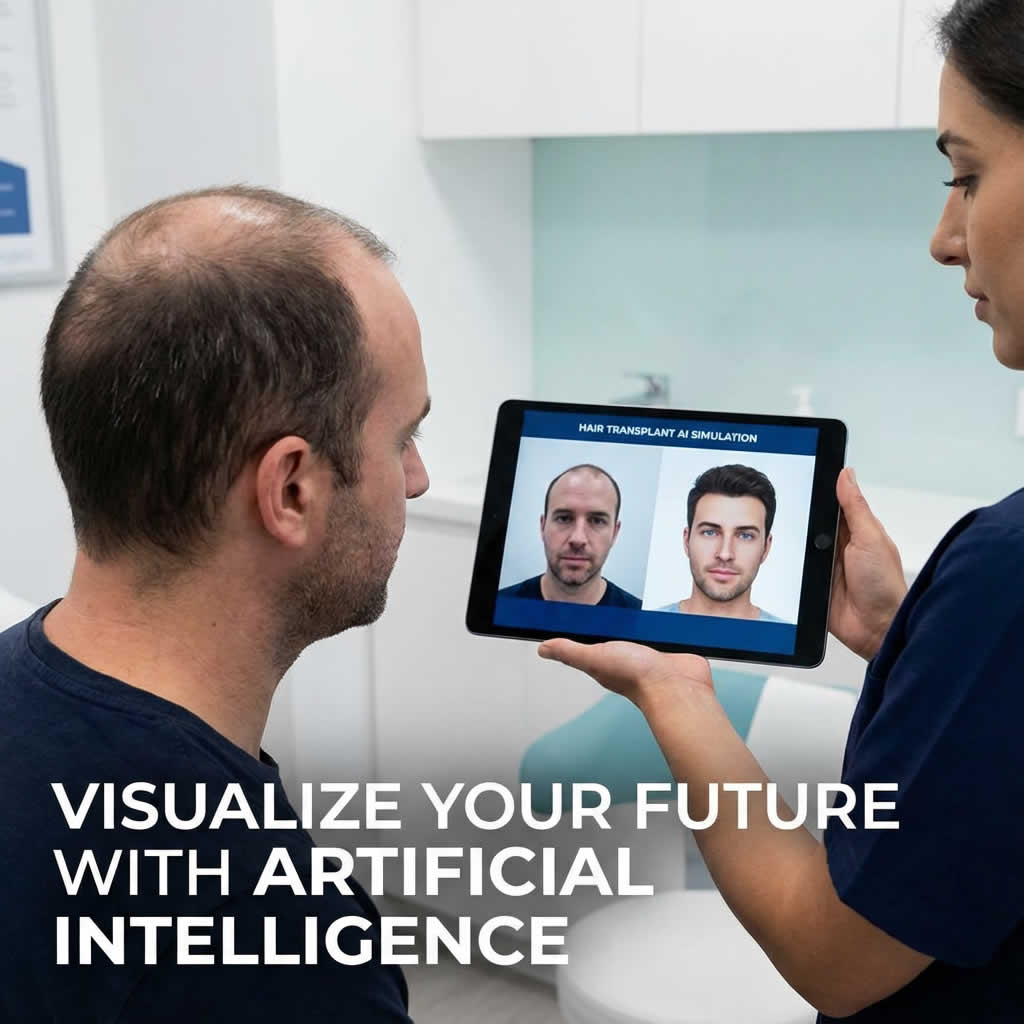
When you sit down for a consultation and see a high-fidelity render created by an ai hair replacement engine, the anxiety of the “gamble” disappears. You aren’t just hoping for a good result; you are approving a blueprint. This sense of agency—of being the architect of your own transformation—is why the stigma around these procedures has vanished in 2026. It’s not about “hiding” a flaw; it’s about “optimizing” a feature.
4. The Global Shift: Accessibility Meets Excellence
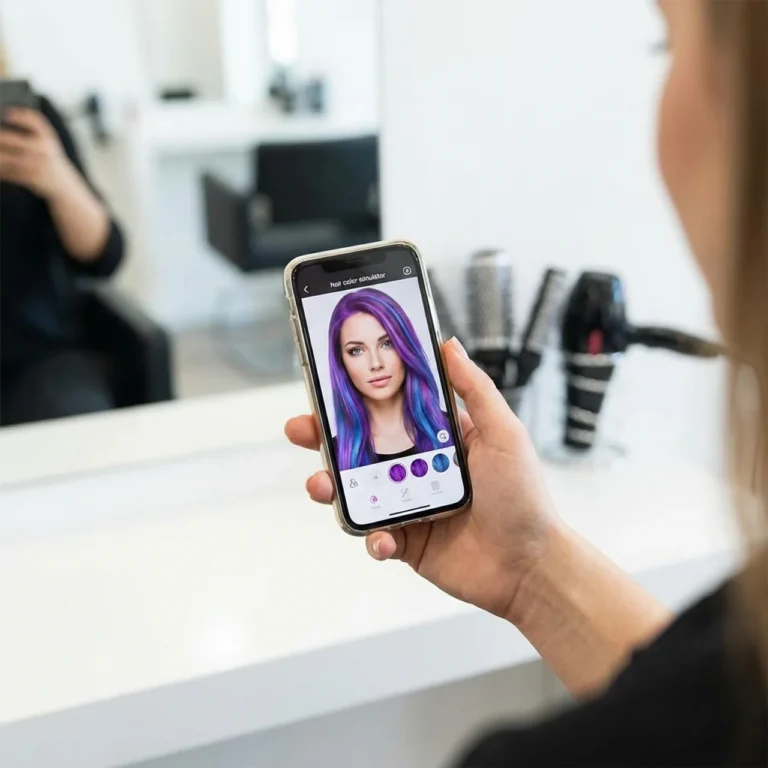
The beauty of 2026 is that you don’t need to be a Hollywood star to access ai hair replacement technology. High-end clinics worldwide have integrated these systems into their standard care. Whether you are browsing through a hair style simulator online at home or sitting in a clinical suite, the power of generative AI is at your fingertips.
This democratization of technology means that the “gold standard” of hair restoration is now the baseline. We have moved past the era of “hair plugs” and into the era of bio-identical, AI-optimized integration. The ai hair replacement movement is a celebration of what happens when human artistry is backed by machine intelligence.
5. Conclusion: Your Transformation, Perfected
We are no longer defined by the cards nature dealt us. In 2026, we have the tools to redesign our reflection with absolute certainty. The rise of ai hair replacement has turned a medical necessity into an empowering lifestyle choice. It is a permanent, painless, and perfectly calculated solution to one of life’s most common challenges.
If you’ve been waiting for the right moment to address your hair density, that moment has arrived. Step into the future of grooming, trust the data, and use ai hair replacement to reveal the version of yourself you’ve always known was there. The mirror is ready—are you?