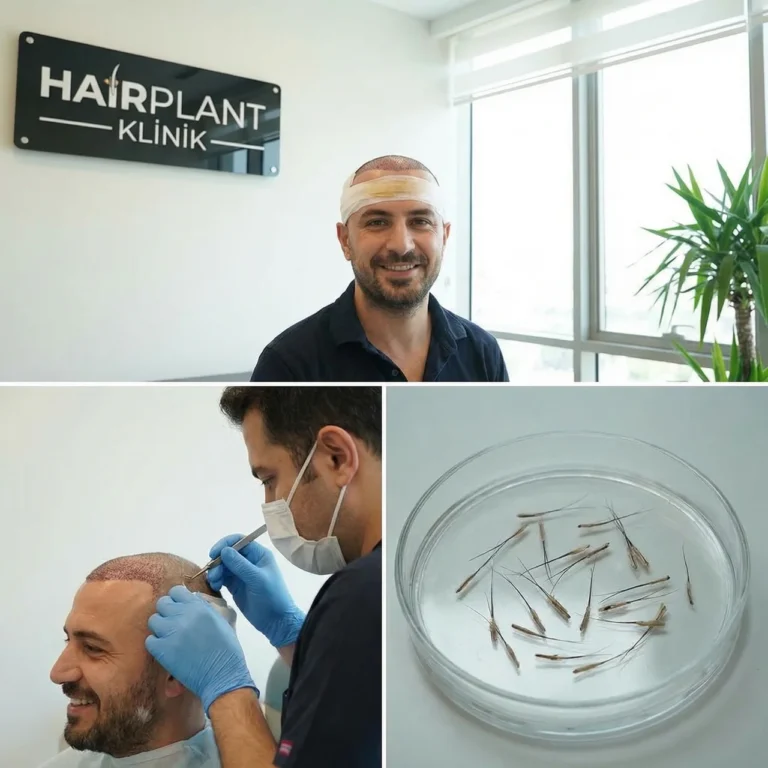
Hair Growth Simulator: A Glimpse into Your Future Transformation
The journey to regaining your hair is often filled with questions. “How will I look in six months?” “Is a lower hairline better for my face shape?” In the past, patients had to rely solely on their imagination and the surgeon’s sketches. Today, the Hair Growth Simulator has revolutionized the industry, allowing patients to see a digital preview of their results before a single graft is moved. This technology bridges the gap between expectation and reality, making the decision-making process more transparent and exciting than ever before.
What is a Hair Growth Simulator?
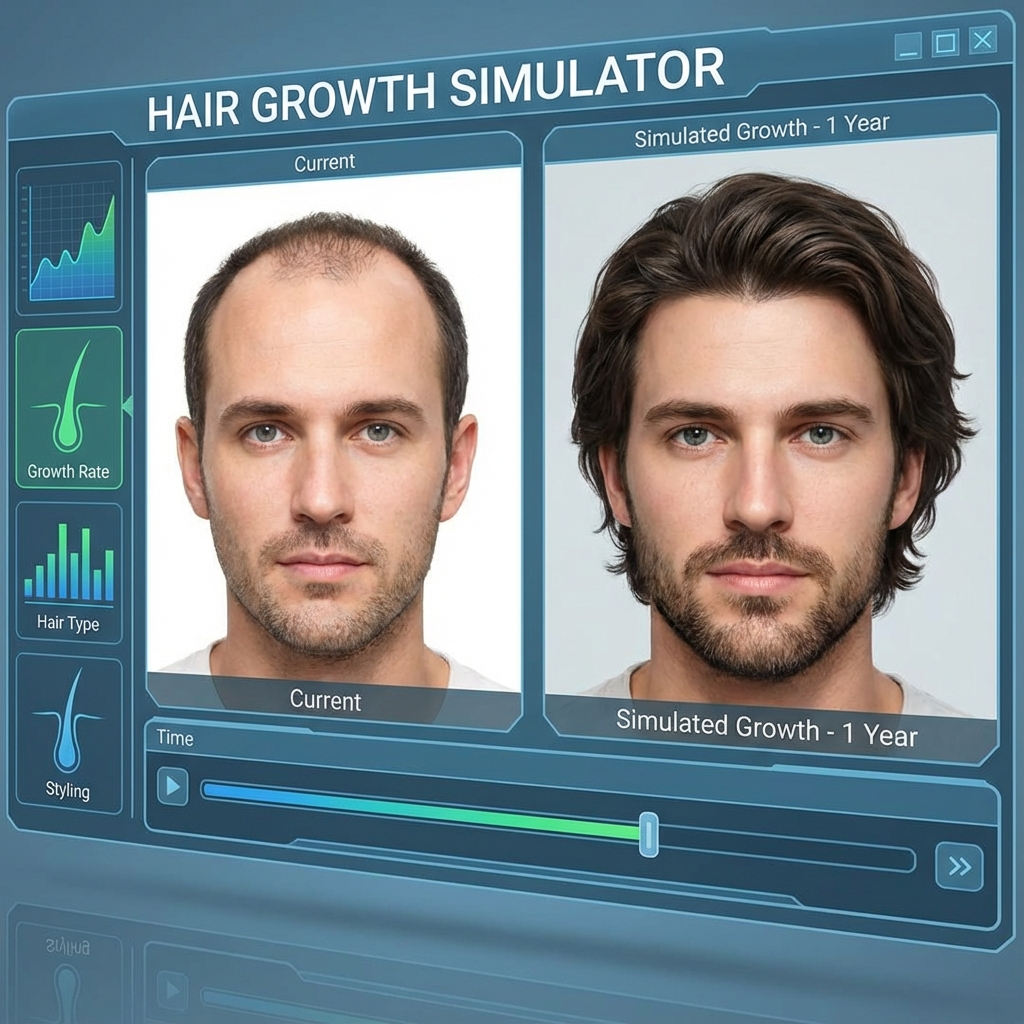
A Hair Growth Simulator is an advanced software tool that uses high-resolution imaging and artificial intelligence to project the outcome of a hair restoration procedure. By uploading photos of your current hair loss state, the simulator analyzes your facial proportions, bone structure, and donor hair availability. It then generates a 3D or high-definition 2D model showing how you will look once the transplanted hair fully matures.
This isn’t just about “adding hair” to a photo. Sophisticated simulators take into account the angle of hair growth, the density of the follicles, and the natural recession of a mature hairline, providing a result that is scientifically grounded and aesthetically pleasing.
The Psychological Impact of Visualization
The most significant barrier to hair transplant surgery is often “the fear of the unknown.” Using a Hair Growth Simulator provides immediate psychological relief.
- Validation of Choice: Seeing a realistic version of yourself with a fuller head of hair confirms that the procedure is a worthwhile investment in your self-esteem.
- Refining the Design: If the simulator shows a hairline that looks “too straight” or “too low” for your age, you can adjust it digitally. This collaborative design process ensures that you and your surgeon are on the exact same page.
- Managing the “Waiting Game”: Hair transplant results take 12 to 18 months to fully manifest. Having your Hair Growth Simulator image saved on your phone serves as a motivational tool during the “shock loss” phase, reminding you of the goal you are working toward.
How Science Powers the Simulation
Modern Hair Growth Simulator technology is built on vast databases of clinical results. It doesn’t just paint hair on a scalp; it calculates the “Graft-to-Area” ratio.
- Donor Assessment: The software helps estimate how many grafts are needed to achieve the density shown in the simulation.
- Aging Predictions: Advanced simulators can even show how the transplant will look as you age, ensuring the design remains natural-looking 10 or 20 years down the line.
- Light and Texture Analysis: The AI accounts for how different hair textures (curly, straight, fine, or coarse) reflect light, making the simulated image look like a real photograph rather than a digital drawing.
Enhancing the Consultation Experience
When you visit a high-end clinic, the Hair Growth Simulator is often the highlight of the consultation. It transforms a clinical discussion into an interactive design session.
- Personalized Mapping: The surgeon uses the simulator to mark the extraction and implantation zones.
- Comparison of Techniques: You can see the difference in potential density between a DHI (Direct Hair Implantation) approach versus a traditional FUE approach.
- Realistic Timeline: Some simulators can show a month-by-month progression, illustrating what you will look like at month 3, month 6, and year 1.
The Limitations: Simulation vs. Reality
While a Hair Growth Simulator is an incredible tool, it is important to remember that it is a prediction, not a guarantee. Biology is not as predictable as software. Factors such as your body’s healing rate, the survival rate of the grafts, and how well you follow post-operative care instructions will determine the final result. A professional clinic will use the simulator as a guide to set realistic expectations, rather than a promise of perfection.
Choosing the Right Clinic for Technology
If you are searching for a “Hair Growth Simulator” near you, look for clinics that invest in the latest medical technologies. A clinic that uses AI-driven simulation is likely a clinic that also uses the latest surgical tools, such as Sapphire blades or Choi pens. This commitment to technology usually reflects a higher standard of care and a dedication to achieving the most natural results possible.
Conclusion: Step Into the Future
The era of “guessing” your hair transplant results is over. The Hair Growth Simulator has turned hair restoration into a precise science and a personalized art form. By visualizing your future self today, you can move forward with your procedure with total confidence and peace of mind. Your journey to a fuller head of hair starts with a single digital image—and ends with a lifetime of renewed confidence.
Hair Growth Simulator FAQ
It uses AI to analyze your photo and project a realistic ‘after’ image showing more density and a restored hairline.
It’s a great visual guide for hairline design, though final surgical results depend on your natural hair health and surgeon skill.
Yes! At hairsimulate.com, we provide expert simulation to show how SMP will fill your thinning spots before your session.
Many apps offer free basic versions, allowing you to experiment with different hair densities and styles instantly on your phone.
Seeing a potential positive outcome often helps people feel more confident about choosing a real-world hair restoration solution.
Yes, simulators are excellent for showing how added density can restore volume for women dealing with diffuse thinning.
Use a clear, front-facing photo in bright light. This gives the AI the best data to create a natural-looking restoration preview.
Some apps can estimate serum results, but these are visual guesses rather than scientific medical predictions.
SMP at hairsimulate.com provides a real 3D texture and exact color match that no 2D digital simulation can fully replicate.
Visit hairsimulate.com for a professional consultation and a realistic simulation of your future hair restoration results.