Hair AI: How Artificial Intelligence is Redefining Hair Restoration
The future of hair restoration has arrived, and it is powered by hair ai. For years, the success of a hair transplant depended solely on the manual skills and subjective eye of the surgeon. While expertise remains vital, the integration of Digital Hair Mapping has introduced a level of objective precision that was previously impossible. Today, artificial intelligence acts as a sophisticated co-pilot, guiding both patients and doctors through a data-driven journey to achieve the most natural results imaginable.
What is Hair AI?
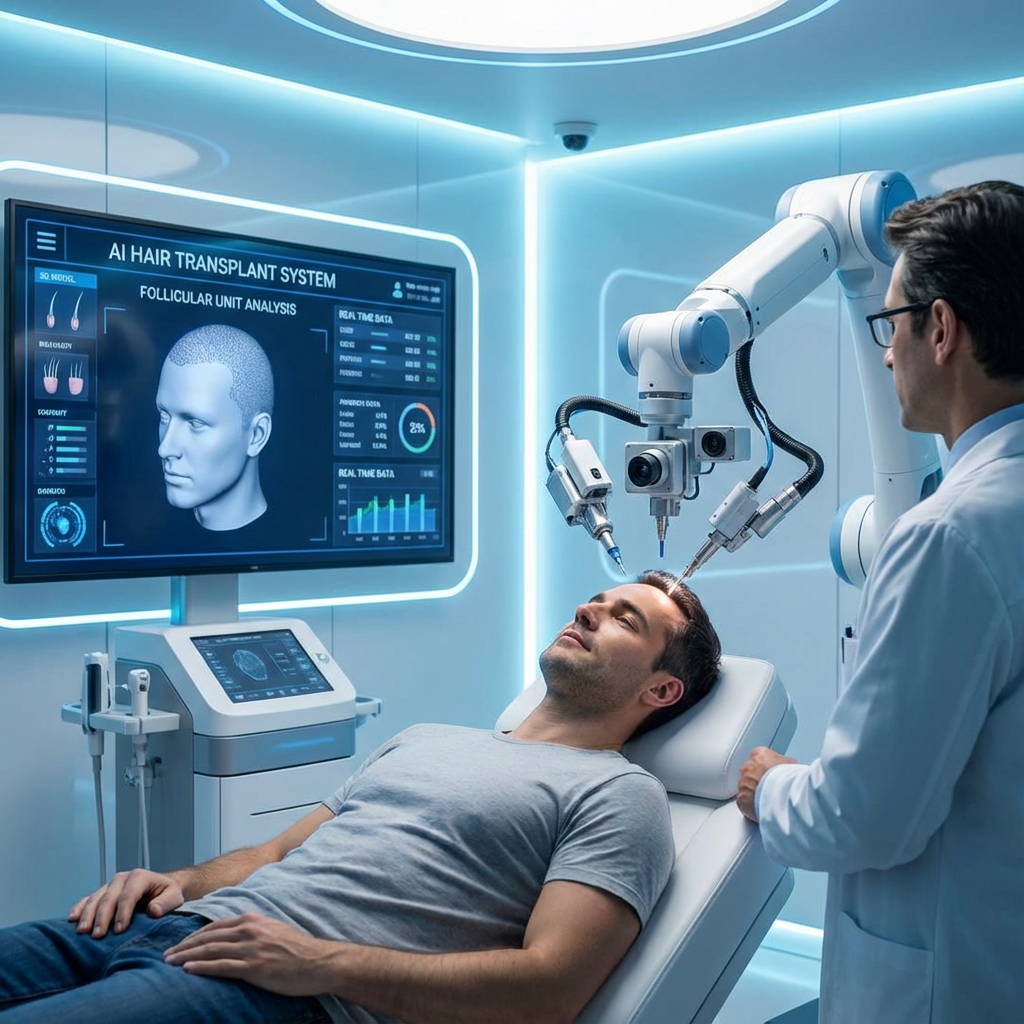
At its core, hair ai refers to the suite of intelligent algorithms used to analyze, simulate, and optimize the hair transplant process. From the moment a patient uploads their first photo to the final post-operative check-up, Digital Hair Mapping is working behind the scenes. It processes millions of data points from successful surgeries worldwide to predict hair growth patterns, graft survival rates, and aesthetic outcomes specifically tailored to your scalp’s unique characteristics.
The Impact of Hair AI on Consultation
The consultation phase is where Digital Hair Mapping truly shines. Traditionally, a surgeon would look at a patient’s hair loss and provide a rough estimate of the grafts needed. With Digital Hair Mapping, this process is now a precise science:
- Graft Calculation: The AI accurately counts the density of your donor area, ensuring that every graft is used efficiently without over-harvesting.
- Predictive Outcomes: Hair ai shows you exactly how your hair will look at 3, 6, and 12 months. This eliminates the anxiety of the “waiting period” by giving you a clear visual goal.
- Facial Harmony: The AI analyzes your facial symmetry to suggest a hairline that complements your aging process, ensuring you look great not just today, but ten years from now.
Precision Mapping and Design
Designing a hairline is an art form, but hair ai provides the canvas and the measurements. By using 3D scalp mapping, hair ai can determine the exact depth and angle at which each follicle should be placed. This is crucial because hair on the temples grows at a different angle than hair on the crown. By following an AI-generated map, surgeons can achieve a level of naturalness that mimics the complexity of biological hair growth perfectly.
Why Modern Patients Demand Hair AI
Modern patients are tech-savvy and results-oriented. They don’t want to leave their appearance to chance. Clinics that adopt hair ai technology demonstrate a commitment to innovation and patient safety.
- Enhanced Safety: By predicting the healing capacity of the skin, AI helps surgeons avoid complications.
- Personalized Treatment: There is no “standard” procedure anymore; every plan is uniquely generated by hair ai.
- Transparency: Patients feel more in control when they can see the data and the simulated results before the surgery begins.
The Role of Hair AI in Post-Op Care
The journey doesn’t end when the surgery is over. Hair ai is now being used in mobile apps that allow patients to track their growth. By taking a weekly photo, the hair ai can analyze if the healing is on track, if the redness is fading at the right speed, and when the first new hairs are beginning to break through the surface. This continuous feedback loop provides immense peace of mind during the recovery phase.
Conclusion: The Intelligent Path to Confidence
If you are looking for the best possible results, choosing a clinic that utilizes hair ai is no longer optional—it is a necessity. This technology bridges the gap between human artistry and digital perfection. With hair ai, your hair transplant is no longer a gamble; it is a meticulously planned transformation. Embrace the intelligence of the future and rediscover your confidence with the precision of AI.
Hair AI & Future Restoration FAQ
It’s the use of smart algorithms to map hair loss, plan surgeries, and predict restoration outcomes with extreme precision.
AI calculates the perfect density and angle for grafts, ensuring your new hairline looks 100% natural and symmetrical.
Yes, AI can analyze your current scalp data to predict where you might lose hair in the next decade, allowing for early treatment.
We use AI simulations at hairsimulate.com to show you a ‘before and after’ preview of your hair simulation before the first session.
No, AI acts as a high-tech assistant. The skill and artistic judgment of your specialist remain the most important factor.
Modern AI tools are incredibly precise, giving you a very realistic look at your future results and helping you plan your journey.
Yes, AI analysis can spot subtle signs of specific scalp conditions much faster than traditional methods.
AI tools are becoming a standard part of premium hair restoration, often included in your consultation to ensure top-tier results.
AI-guided systems ensure only the best follicles are taken, preserving your donor area and improving overall graft survival.
Experience the future of hair care at hairsimulate.com with our advanced technology and professional consultations.