Phytochemical Synergy: The Scientific Benefits of Herbs and Essential Oils in Beauty
In the evolution of cosmetic science, 2026 has marked a definitive return to “bio-identical” and “botanical” pharmacology. While synthetic compounds dominated the industry for decades, current dermatological research is refocusing on the complex molecular structures found in nature. To truly appreciate the benefits of herbs and essential oils in beauty, one must look beyond the aromatic appeal and analyze the secondary metabolites—such as polyphenols, terpenes, and flavonoids—that interact with the human integumentary system at a cellular level.
This article provides a deep dive into the biochemical mechanisms by which botanical extracts improve skin barrier function, combat oxidative stress, and facilitate tissue regeneration.
1. The Chemistry of Volatile Organic Compounds (VOCs)
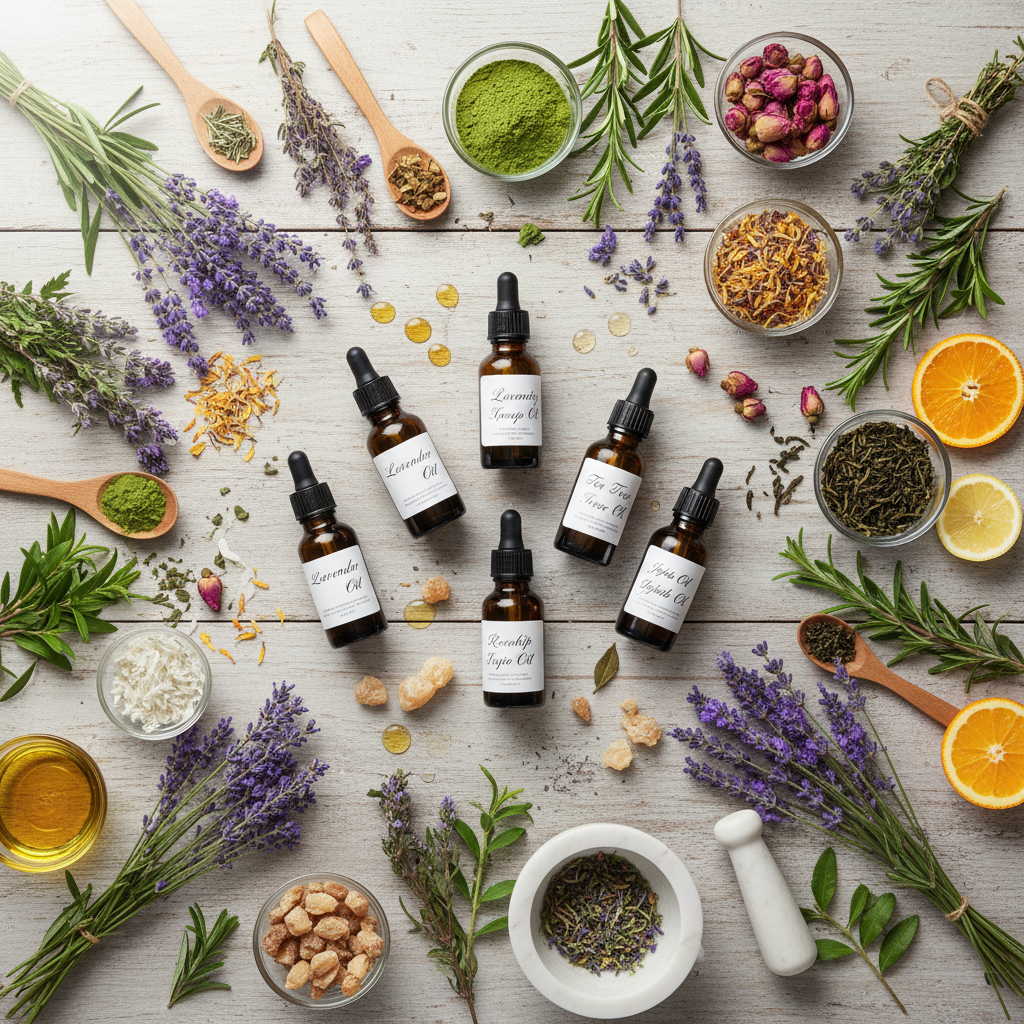
Essential oils are not “oils” in the traditional sense; they are highly concentrated volatile organic compounds extracted from plants. The benefits of herbs and essential oils in beauty stem from their low molecular weight, which allows them to penetrate the stratum corneum (the outermost layer of the skin) more effectively than many synthetic humectants.
For instance, linalool and linalyl acetate, found in Lavandula angustifolia, have been clinically shown to exert anti-inflammatory effects by inhibiting the production of pro-inflammatory cytokines. This makes them invaluable for treating conditions like rosacea and inflammatory acne. Furthermore, the lipophilic nature of these oils allows them to merge with the skin’s natural lipid barrier, preventing transepidermal water loss (TEWL) and maintaining hydration.
2. Antioxidant Defense and Polyphenolic Activity
The most significant threat to skin longevity is oxidative stress caused by ultraviolet (UV) radiation and environmental pollutants. Here, the benefits of herbs and essential oils in beauty are found in their high concentration of antioxidants.
Herbs like Rosmarinus officinalis (Rosemary) and Camellia sinensis (Green Tea) are rich in rosmarinic acid and epigallocatechin gallate (EGCG). These molecules act as free radical scavengers, neutralizing reactive oxygen species (ROS) before they can damage cellular DNA or degrade collagen fibers. By incorporating these botanical polyphenols into a beauty regimen, individuals can significantly slow the process of photoaging and prevent the formation of fine lines and dyspigmentation.
3. Antimicrobial Properties and the Skin Microbiome
Modern dermatology in 2026 places a high priority on the skin microbiome—the ecosystem of bacteria that protects our skin. The benefits of herbs and essential oils in beauty extend to their ability to act as selective antimicrobials.
Terpinen-4-ol, the primary active constituent in Melaleuca alternifolia (Tea Tree) oil, has been extensively studied for its ability to eliminate Cutibacterium acnes without the harsh side effects of benzoyl peroxide. Unlike synthetic antibiotics, many essential oils can disrupt the biofilms of harmful bacteria while remaining relatively gentle on the beneficial flora. This selective action helps maintain a balanced microbiome, which is essential for preventing chronic skin sensitivity and atopic dermatitis.
4. Tissue Regeneration and Cicatrization
The regenerative benefits of herbs and essential oils in beauty are most evident in the treatment of scars and hyperpigmentation. Botanical extracts like Helichrysum italicum contain diketones, which are known to stimulate the production of new skin cells and improve localized microcirculation.
Additionally, herbs such as Centella asiatica (often called Tiger Grass or Cica) contain triterpenoids like asiaticoside and madecassoside. These compounds stimulate the synthesis of Type I collagen and increase the tensile strength of newly formed skin. In a clinical setting, these herbs are used post-procedure to accelerate the healing of the epidermis and reduce the appearance of post-inflammatory hyperpigmentation (PIH).
5. Essential Oils in Trichology and Scalp Health
The benefits of herbs and essential oils in beauty are not limited to the face; they play a critical role in advanced hair care. Menthol, derived from Mentha piperita, acts as a mild vasodilator when applied to the scalp. By stimulating the sensory receptors, it induces a cooling sensation and increases blood flow to the hair follicles, which can enhance the delivery of nutrients to the hair bulb.
Similarly, rosemary oil has gained scientific traction for its ability to inhibit the activity of 5-alpha reductase on the scalp—the enzyme responsible for converting testosterone into DHT. While not as potent as pharmaceutical finasteride, the consistent use of rosemary extract provides a non-invasive, botanical approach to maintaining hair density and preventing follicular miniaturization.
6. The Science of Olfactory Stimulation and Psychodermatology
A unique aspect of the benefits of herbs and essential oils in beauty is the connection between the olfactory system and the skin, a field known as psychodermatology. When volatile oils are inhaled during a skincare ritual, they interact with the limbic system of the brain.
Studies have shown that reducing cortisol levels through aromatherapy can have a direct positive impact on skin health. High cortisol levels are linked to increased sebum production and the breakdown of hyaluronic acid. By utilizing calming oils like neroli or sandalwood, the beauty routine becomes a dual-action therapy that addresses both the physical and emotional triggers of skin distress.
7. Safety, Standardization, and the “Natural” Fallacy
It is important to note that “natural” does not automatically mean “safe.” As part of the benefits of herbs and essential oils in beauty, scientific rigor must be applied to the concentration and purity of these extracts. Essential oils are extremely potent and can cause contact dermatitis if used incorrectly or without proper dilution.
In 2026, the industry has moved toward standardized extracts, where specific active molecules (such as thymol or carvacrol) are measured to ensure consistency and safety. Using GC-MS (Gas Chromatography-Mass Spectrometry) testing, high-end beauty brands can guarantee that their botanical ingredients are free from contaminants and synthetic fillers, ensuring that the biological benefits are maximized while the risk of irritation is minimized.
8. Conclusion: A Botanical Future in Clinical Beauty
The integration of herbs and essential oils into modern beauty is a testament to the sophistication of phytotherapy. By harnessing the antioxidant, antimicrobial, and regenerative properties of these plants, we can achieve dermatological results that are both effective and sustainable.
The benefits of herbs and essential oils in beauty are no longer a matter of folklore; they are a matter of documented science. As we continue to refine our extraction methods and understand the synergistic relationships between different plant compounds, the boundary between “nature” and “technology” will continue to blur, leading to a new era of holistic, science-based skincare.
Herbal Care & Hair Restoration FAQ
Rosemary, peppermint, and lavender oils are top choices. They help by increasing blood flow to the scalp and providing antioxidant protection to follicles.
Oils are great for maintenance, but for visible thinning, they can’t match the immediate and guaranteed results of Scalp Micropigmentation (SMP).
Wait at least 30 days. Potent oils can irritate healing skin, so it’s vital to let the pigments settle completely before starting a botanical oil routine.
Yes, its antifungal properties clear the scalp of dandruff, making it an excellent prep tool for a cleaner, better simulation result.
Healed SMP isn’t faded by oils like argan or coconut. However, avoid “oily-looking” scalps as they can sometimes reflect light away from the matte simulation.
Research shows they can have similar effects on growth, but rosemary is a natural alternative that takes more time and consistency to show results.
Yes. Build-up can clog pores. A clean, healthy scalp environment is essential for both your natural hair and your hair restoration results.
Unfortunately, no. While they strengthen hair, only SMP or a transplant can physically redefine a receding hairline and restore a youthful look.
Never use undiluted essential oils. They are highly concentrated and can cause scalp burns, which might lead to further hair loss or scarring.
Every scalp is unique. At hairsimulate.com, we help you find the right balance between natural herbal care and professional hair restoration.