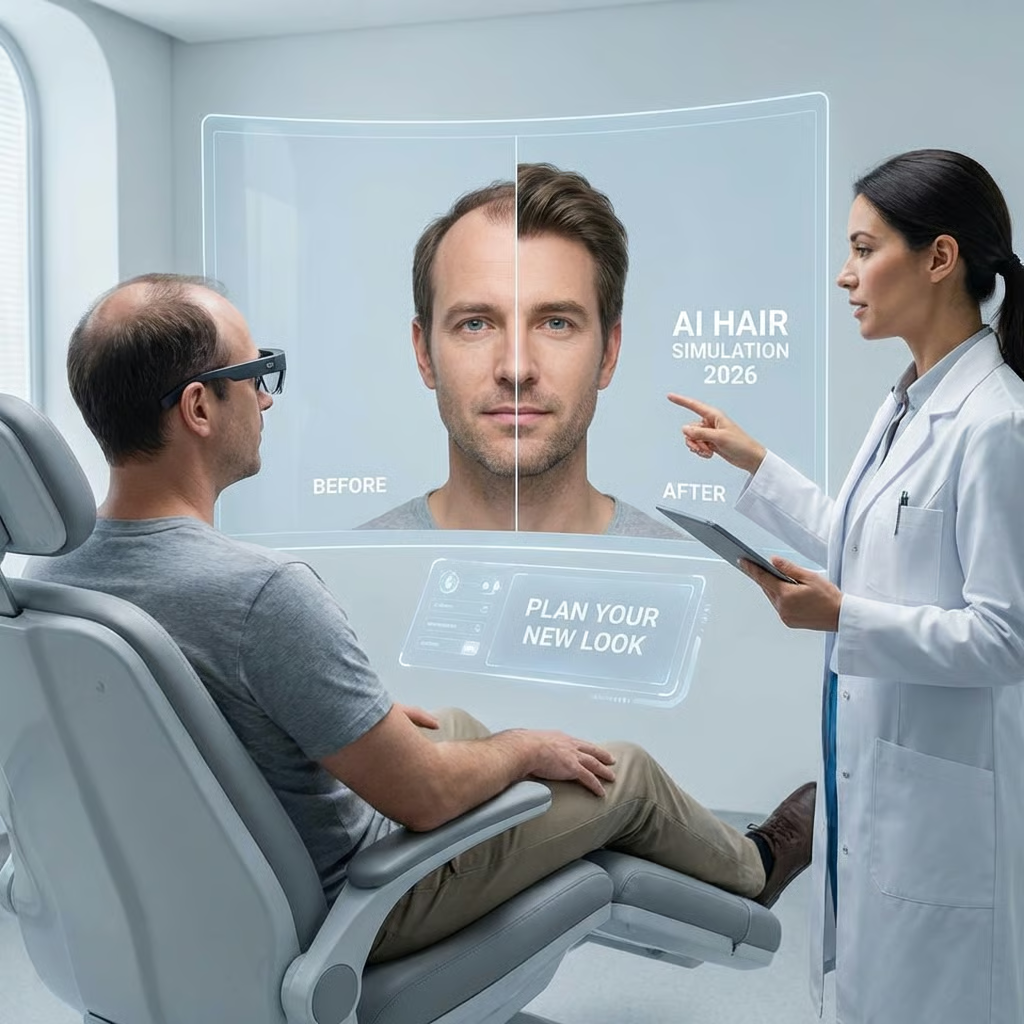
The Ultimate Guide to Female Hair Transplant: Everything You Need to Know in 2026
For a long time, the world of hair restoration felt like a “boys’ club.” When people thought of surgical solutions for thinning, they pictured men in their 50s. But the reality in 2026 is much different. Women are now stepping into the spotlight, reclaiming their confidence, and demanding permanent solutions for thinning tresses. Whether it’s due to genetics, hormonal shifts, or years of tight hairstyles, the decision to seek a female hair transplant is a powerful act of self-care.
If you’ve been looking into female hair implants or searching for a ladies hair transplant, you probably have a million questions. Is it different for women? Do I have to shave my head? Will it look natural? In this comprehensive guide, we are going to break down every aspect of female hair transplant surgery, from the latest tech to the emotional journey of recovery.
1. Why the Taboo Around Female Hair Transplant is Fading
For decades, women suffered in silence, hiding thinning parts with powders or avoiding the wind at all costs. However, the conversation has changed. We’ve realized that hair loss isn’t just a “male problem.” In fact, nearly 40% of women experience some form of thinning by age 50.
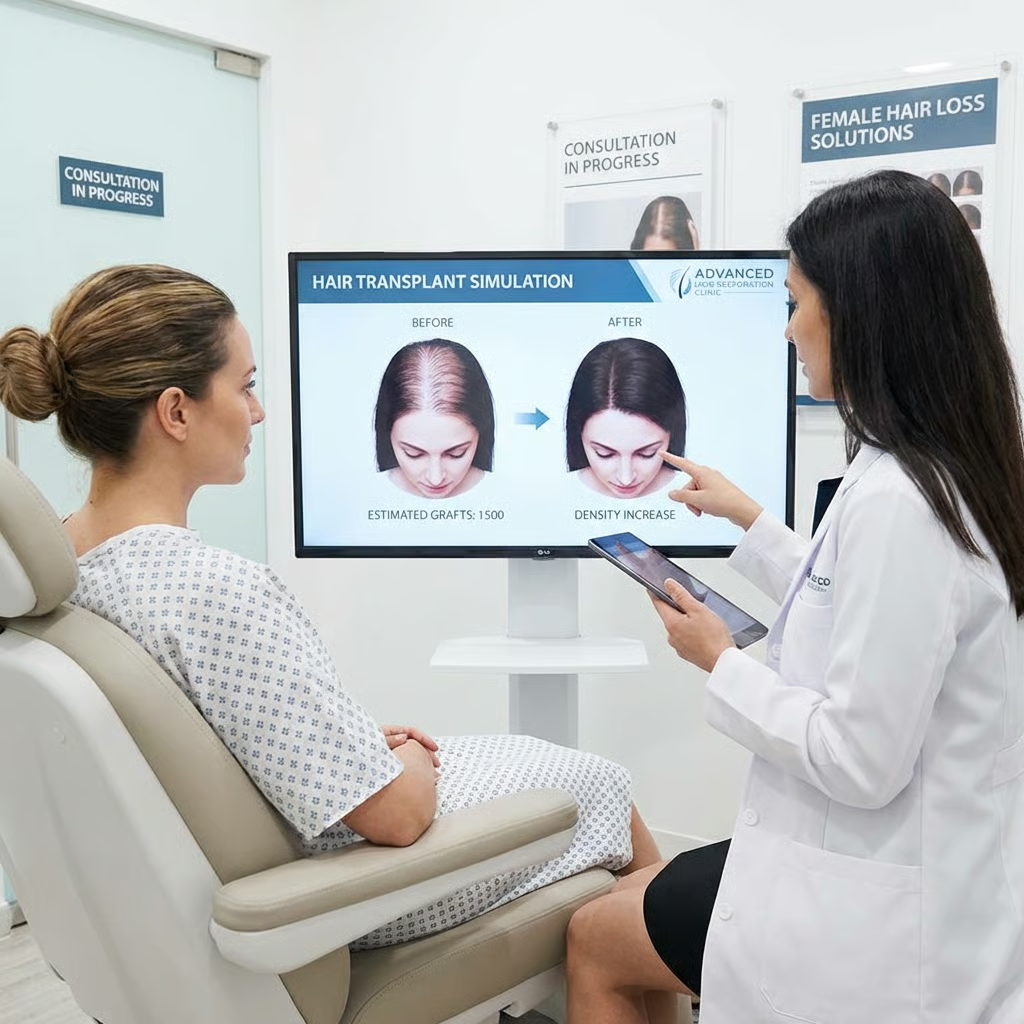
Choosing a female hair transplant is no longer a hidden secret; it’s a modern grooming standard. With the rise of high-definition 3D simulations and minimally invasive techniques, the results are so natural that it’s become impossible to tell who has had a procedure and who was simply “born with it.”
2. Female Hair Transplant vs. Male Procedures: The Key Differences
While the biological process of moving hair is similar, the artistic execution of a female hair transplant is entirely unique. Men usually want to fix a receding “M” shape, but women typically need to address diffuse thinning across the top or a widening part.
- Pattern Analysis: Surgeons must be experts in the Ludwig Scale (the female version of the Norwood Scale used for men).
- The “No-Shave” Priority: Unlike men, most women are not willing to buzz their heads. This is why a female hair transplant often utilizes “Unshaven FUE” or DHI techniques, where follicles are tucked between existing long hairs.
- Hormonal Considerations: A good clinic will always check your iron levels and thyroid function before recommending a female hair transplant, as these can often be the root cause of the thinning.
3. Exploring Your Options: From Implants to Grafting
When you hear the term female hair implants, it can mean a few different things in 2026. Most commonly, it refers to your own natural hair being relocated to a new area.
H2: Ladies Hair Transplant and Hair Grafting for Women
The process of hair grafting for women involves taking “donor” hair from the back of the head—where hair is genetically programmed to be permanent—and moving it to the thinning zones. A ladies hair transplant is essentially a redistribution of your own assets.
H2: Hair Implant for Ladies: The Rise of Bio-Compatible Fibers
In some specific cases where a patient doesn’t have enough donor hair, a hair implant for ladies might involve bio-compatible synthetic fibers. However, for 95% of patients, a traditional female hair transplant using their own follicles remains the gold standard for safety and longevity.
4. The Art of the Hairline Transplant: Women’s Aesthetic Goals
One of the most requested procedures today is the hairline transplant women specific design. Many women are born with naturally high foreheads or experience “traction alopecia” from years of tight ponytails and extensions.
A hairline transplant women design requires a soft, “feminine” touch. Unlike the sharp, straight lines often seen in men, a woman’s hairline should have micro-irregularities and fine “baby hairs” at the very front. This ensures that when you pull your hair back in a bun, the result looks 100% organic.
5. Is “Female Hair Plugs” Still a Valid Term?
You might still hear people mention female hair plugs, but it’s important to understand that “plugs” are a relic of the past. The “doll hair” look of the 1980s is gone.
Modern female hair transplant techniques use “Follicular Units.” We move one hair at a time. So, while the term female hair plugs might show up in old articles, what you are actually getting today is a sophisticated microsurgery that mimics the natural flow of your hair.
6. Understanding Hair Surgery for Women in 2026
When we talk about hair surgery for women, we are talking about precision.
- FUE (Follicular Unit Extraction): Individual follicles are removed with a tiny punch tool.
- DHI (Direct Hair Implantation): The hairs are placed using a specialized pen, allowing for maximum density without making large incisions.
- Hair loss surgery for women has become so refined that the “scars” are invisible to the naked eye, even if you wear your hair short.
7. The Financial Investment: Costs of Female Hair Restoration
Let’s be real: hair replacement surgery for women is an investment. Because hair transplant surgery women specific cases often require more time (due to working around long hair), the price can be slightly higher than male procedures.
- US/UK Prices: Expect to pay between $8,000 and $18,000.
- Medical Tourism (Turkey/Spain): High-end female hair transplant procedures can be found for $3,000 to $6,000, often including luxury hotel stays.
While the cost of hair replacement surgery for women may seem high upfront, when you compare it to a lifetime of buying expensive toppers, wigs, and thickening fibers, the surgery often pays for itself within five years.
8. Recovery and Results: What to Expect
The beauty of a female hair transplant is that the recovery is much faster than people think.
- The First Week: You might have some minor swelling or redness around the hairline.
- The “Shedding” Phase: About 3 weeks after your female hair transplant, the new hairs will fall out. Do not panic! This is a normal part of the cycle. The root is alive; it’s just taking a nap.
- Month 6-12: This is when the magic happens. Your new hair starts to grow in thick and strong. By the one-year mark, you can style, color, and cut your transplanted hair just like your original hair.
9. Conclusion: Taking the Next Step
A female hair transplant is about more than just aesthetics; it’s about how you feel when you wake up in the morning. Whether you call it a ladies hair transplant or hair loss surgery for women, the goal is the same: feeling like yourself again.
With the technology of 2026, there is no reason to settle for thinning hair. Explore your options, consult with a specialist, and see if a female hair transplant is the right path for your journey back to confidence.
Female Hair Transplant: Top 10 Expert FAQ
Women often have diffuse thinning rather than a bald spot. This requires a high-precision approach to increase density between existing hairs without causing damage, which we plan using AI mapping.
No! Unshaven techniques (U-FUE/DHI) are standard for women. We only trim a tiny hidden area in the back, so your surgery remains completely invisible to others.
Yes, hairline lowering is very successful in women. It frames the face and reduces forehead height. You can use our simulator to see exactly how a new hairline will look on your face.
The success rate is over 90% for the right candidates. AI simulation is vital here to ensure your donor hair is strong enough to support permanent restoration.
Shock loss is temporary thinning after surgery. It’s a normal scalp reaction and usually resolves within a few months as both new and old hair begin to grow back strongly.
Most women need between 1,500 and 2,500 grafts depending on the area. Our AI graft calculator provides a precise estimate based on your specific thinning pattern.
Yes, this is called Traction Alopecia. Hair transplants are extremely effective at restoring hair lost due to tension, as the donor hair is typically very healthy.
Early growth starts at 4 months, but because women’s hair is often longer, it takes 12-15 months to see the full integration and density of the new hair.
If thinning is everywhere (DUPA), surgery might not be the best option. Our AI analysis helps identify this early, so you can explore better alternatives like SMP or medical therapy.
It provides visual peace of mind. Seeing the potential density boost or hairline change on your own photo helps you make a confident, informed decision before the procedure.