The 2026 Definitive Guide to Male Hair Transplant: Everything You Need to Know
If you’ve spent any time looking in the mirror and wondering where your 20-year-old hairline went, you are in good company. Hair loss is a journey that millions of men take every year, and by 2026, the solutions have become so advanced that “going bald” is effectively an optional choice.
The world of male hair transplant surgery has moved at light speed. We’ve gone from the “Lego-head” look of the 80s to AI-mapped, robotic-assisted procedures that are virtually undetectable. But with so many terms like male hair plugs, male hair loss surgery, and hair transplant surgery for men being thrown around, it’s easy to get overwhelmed.
In this 3,000-word deep dive, we’re going to strip away the marketing jargon and give you the cold, hard facts about reclaiming your hair in 2026.
1. The Death of “Male Hair Plugs” and the Rise of Follicular Units
Let’s start by clearing up the biggest misconception in the industry. People still use the term male hair plugs, but in a modern medical context, “plugs” don’t exist anymore.
Back in the day, surgeons would take a circular “punch” of skin—about the size of a pencil eraser—containing 20 or 30 hairs and stick it into a hole on the top of your head. The result? A patchy, doll-like appearance that shouted, “I had a hair transplant!” from across the street.
Today’s male hair transplant is a game of microscopic detail. Instead of moving “plugs” of skin, surgeons move individual follicular units. These are tiny natural groupings of 1 to 4 hairs. By placing these individual units in the same direction and angle as your natural hair, the results are so seamless that even your barber won’t be able to tell the difference.
2. Male Hair Transplant: The 2026 Techniques (FUE vs. DHI)
When you start researching male hair surgery, you’ll run into two main acronyms: FUE and DHI. In 2026, these are the heavy hitters.
FUE (Follicular Unit Extraction)
This is the most popular form of male hair transplant in the world.
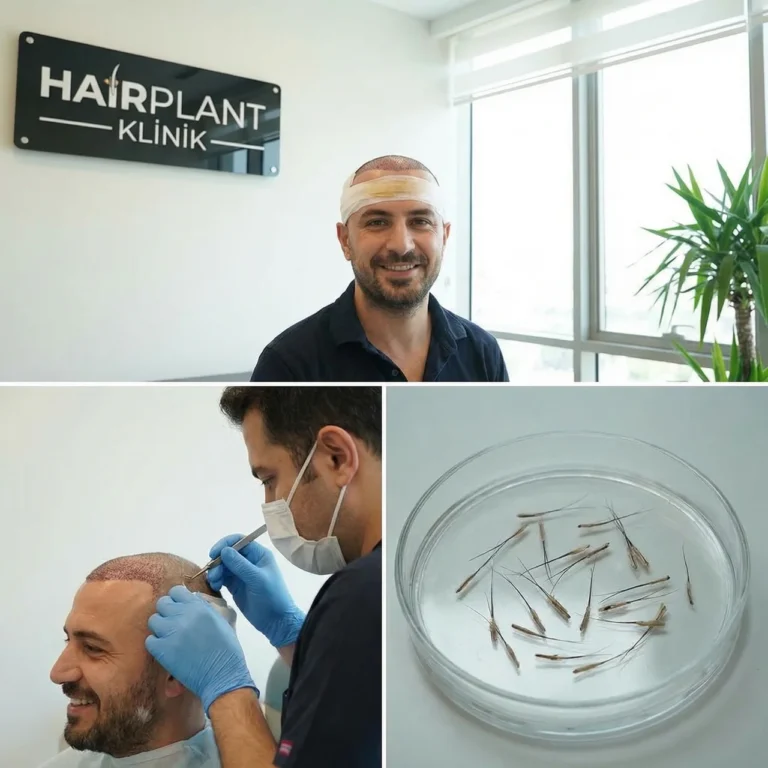
- The Process: The surgeon extracts individual follicles from the “donor area” (usually the back of your head) using a micro-punch tool.
- Sapphire FUE: In 2026, we use sapphire blades rather than steel. They are sharper and smoother, which means the tiny “channels” opened in your scalp heal faster and allow for much higher density.
DHI (Direct Hair Implantation)
DHI is often considered the “VIP” version of a male hair transplant.
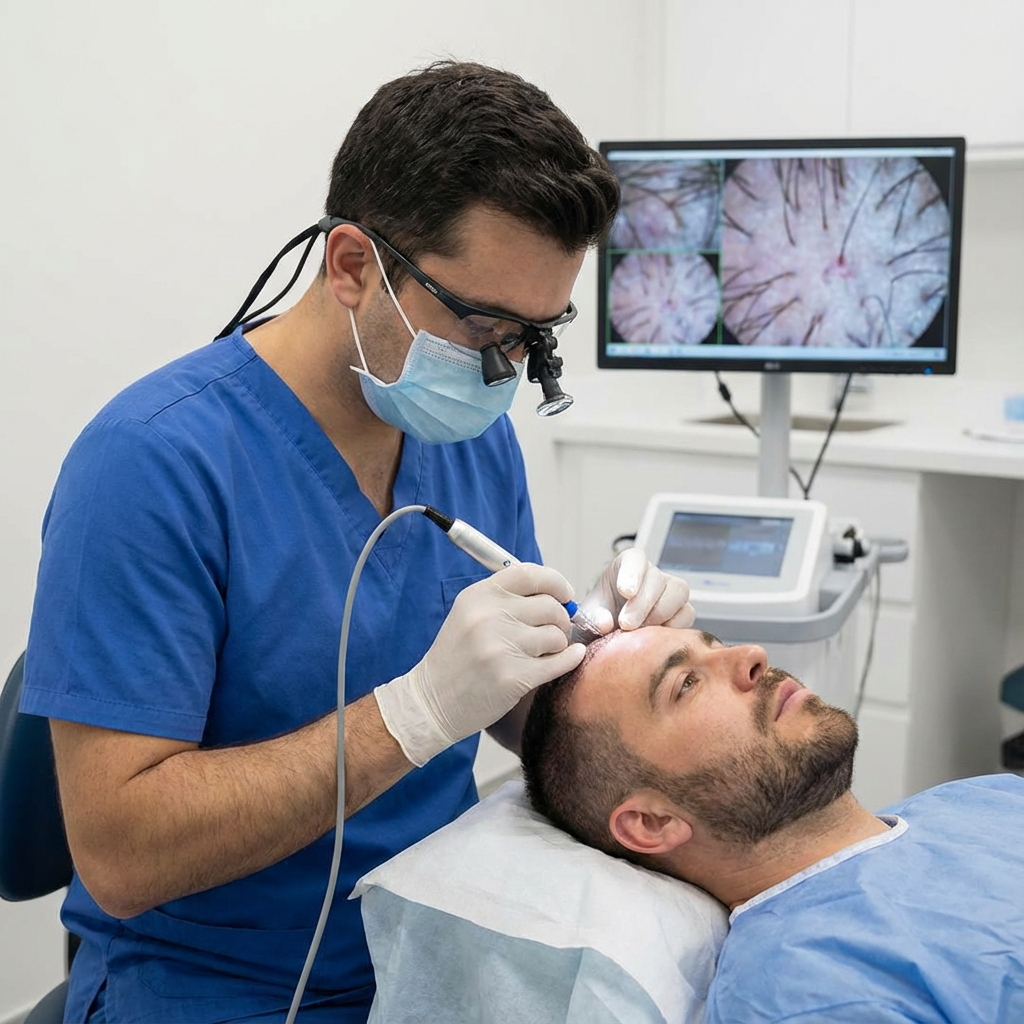
- The Process: Using a specialized tool called a Choi Implanter Pen, the follicles are extracted and then immediately implanted into the recipient area without the need to “pre-open” channels.
- The Benefit: Because the follicle spends less time outside the body, survival rates are slightly higher, and it allows for a “no-shave” procedure—perfect for men who want to keep their male hair loss surgery a complete secret.
3. The Role of AI in Hair Transplant Surgery for Men
We can’t talk about 2026 without talking about Artificial Intelligence. Hair transplant surgery for men has been revolutionized by AI-driven planning.
Before you even sit in the surgical chair, AI software analyzes your scalp. It looks at your hair thickness, the “life expectancy” of your donor hair, and your future balding patterns. It then creates a 3D “blueprint” for your surgeon. This ensures that the surgeon doesn’t “over-harvest” hair from the back, leaving you with a thin donor area later in life.
When you choose a male hair transplant today, you aren’t just getting a doctor’s “best guess”—you’re getting a mathematically optimized hair restoration plan.
4. Male Hair Loss Surgery: What Does it Actually Cost?
The elephant in the room is always the price. Male hair loss surgery varies wildly depending on where you live and how many grafts you need.
| Region | Avg. Cost (3,000 Grafts) | Price Per Graft |
| USA / Canada | $12,000 – $20,000 | $5.00 – $8.00 |
| United Kingdom | £9,000 – £15,000 | £3.50 – £6.00 |
| Turkey (Istanbul) | $2,500 – $5,000 | $0.70 – $1.20 |
| Mexico | $4,000 – $7,500 | $1.50 – $2.50 |
While a male hair transplant in a premium US clinic is an investment, many men are choosing “Medical Tourism” in hubs like Istanbul, where you can get a world-class male hair surgery for the price of a used car.
5. The Emotional Journey: Is Male Hair Surgery Worth It?
Statistics show that 85% of men will have significantly thinning hair by the age of 50. For many, this leads to a loss of “social power” or a feeling that they look older than they feel.
A male hair transplant isn’t just about the hair; it’s about the psychology of the mirror. When you no longer have to worry about overhead lighting or wind, your confidence shifts. This is why hair transplant surgery for men has become one of the most common cosmetic procedures globally—it has the highest “satisfaction rate” of almost any elective surgery.
6. Recovery: The First 14 Days of Your New Hairline
If you’re worried about the downtime of male hair surgery, don’t be. By 2026, the “post-op” phase has been refined to a science.
- Days 1-3: You’ll have some tiny scabs (red dots) where the hair was moved. You’ll need to sleep with your head elevated.
- Days 4-7: You can start gently washing your hair with a special foam. The scabs start to flake off.
- Day 10: Most people can return to the office without anyone noticing they had a male hair transplant.
- Month 1-3: The “Shock Loss.” This is the scary part—the transplanted hair falls out! Don’t worry, the follicle is safe under the skin; only the hair shaft is shedding.
7. Results: When Will You See the “New You”?
Patience is the name of the game. A male hair transplant takes time to “bloom.”
- 6 Months: You’ll see about 50-60% of the growth. The hair will be thin and “wispy.”
- 12 Months: This is the “Final Reveal.” The hair has thickened, the density is set, and you can finally style your hair however you want.
In 2026, we also use PRP (Platelet-Rich Plasma) injections alongside male hair loss surgery to speed up this timeline, often seeing full results by month 9.
8. Final Verdict on Male Hair Transplant
The technology of male hair transplant has officially caught up with our expectations. Whether you are looking to fix a small bald spot or a full “horseshoe” pattern, hair transplant surgery for men provides a permanent, natural-looking solution that male hair plugs of the past never could.
Don’t wait until you’ve lost 70% of your hair. The best candidates for male hair loss surgery are those who still have a good “donor area.” Take the first step, get a consultation, and see what a modern male hair transplant can do for your reflection—and your confidence.
Male Hair Transplant: 10 Essential FAQ
Sapphire FUE and DHI are the top choices. FUE is excellent for large areas, while DHI offers higher density for thinning hairlines. AI simulation helps you choose the right one for your hair type.
It depends on your Norwood Scale level. Stage 3 usually needs ~2,000 grafts, while Stage 5 needs ~4,000. Our AI graft calculator provides a precise count based on your photos.
With modern technology, the success rate is over 95%. Using a simulation before surgery ensures you are happy with the planned design and density targets.
Yes, unshaven techniques allow you to keep your existing hair long while we restore the thinning areas. This makes the procedure much more discreet for professional men.
Not if it’s managed correctly. Surgeons use homogenous extraction to ensure the donor area remains thick. AI mapping helps calculate the safe extraction limit for your scalp.
Yes, follicles from the donor area are resistant to DHT. While those hairs are permanent, we use AI to plan for any future loss of your original hair to keep the look natural over time.
Initial healing takes about 7 days. Most men are back to normal activities in a week. Your AI report will include a detailed month-by-month growth and recovery timeline.
The best hairline is age-appropriate. AI simulation uses your facial ratios to find a height that looks natural now and as you age, avoiding an artificial appearance.
FUE creates channels first, while DHI implants grafts directly with a pen. DHI often allows for more precision in density, which we can demonstrate via our digital previews.
It’s your technical guide. Walking into a clinic with a clear AI plan for your hairline and grafts ensures you get exactly what you want and prevents over-quoting.