Let’s Talk Real Solutions: The Ultimate Guide to Hair Replacement for Women
If you’ve noticed more hair in the shower drain lately or your ponytail feels a little thinner than it used to, I want you to take a deep breath. You are not alone. For a long time, the world treated hair loss like a “man’s problem,” but we know better now. Whether it’s due to hormones, stress, or genetics, the search for effective hair replacement for women has become one of the most talked-about topics in modern self-care.
Gone are the days when your only options were itchy wigs or hiding under a hat. In 2026, we have technology that feels like it’s straight out of a sci-fi movie. If you’re wondering what your options are, you’ve come to the right place. We’re going to break down everything from hair transplant for women to the latest in hair restoration for women, and we’ll do it in plain English—no confusing medical jargon required.
1. Why the Taboo Around Hair Replacement for Women is Breaking
For years, women suffered in silence. We tried every “miracle” shampoo and biotin gummy on the market, hoping for a fix that never came. But the conversation has shifted. High-profile celebrities and influencers are finally being honest about their journeys with hair replacement for women, and it has opened the floodgates for the rest of us.
Choosing a path toward hair replacement for women isn’t about vanity; it’s about reclaiming your identity. Hair is often tied to our femininity and confidence, so taking steps to bring it back is an act of empowerment. Today, clinics are designed specifically for the female experience, focusing on the unique patterns of female hair loss.
2. Hair Implants for Women: The Modern Evolution
When people hear the term hair implants for women, they often think of something artificial. However, in 2026, “implants” usually refer to the sophisticated placement of your own biological follicles into thinning areas.
Unlike men, who usually lose hair in a receding “M” shape, women tend to experience “diffuse thinning” across the top and crown. Modern hair implants for women are designed to weave through your existing hair, adding density where you need it most without damaging the healthy hair you still have. It’s a delicate art form that requires a surgeon with a very soft touch.
3. The Truth About Hair Transplant for Women
Is a hair transplant for women different than it is for men? Absolutely. The strategy is entirely different. In many cases, women don’t want to shave their heads for surgery (and who can blame them?).
This is where Long-Hair FUE or DHI (Direct Hair Implantation) comes in. These techniques allow you to have a hair transplant for women without anyone knowing you had “work done.” The surgeon extracts the follicles and implants them between your long strands. You leave the clinic with your hair looking the same length, just with the promise of future thickness. It’s the ultimate “stealth” beauty move.
4. Are “Hair Plugs for Women” Still a Thing?
Let’s clear the air on a term that scares a lot of people: hair plugs for women. If you’re picturing those “doll hair” tufts from the 1980s, I have good news—those are extinct!
When people search for hair plugs for women today, they are usually looking for permanent follicular units. Modern technology allows us to move individual hairs rather than “plugs” of skin. So, while the term hair plugs for women might still be used in casual conversation, the actual medical result is a seamless, natural-looking hairline that flows perfectly with your natural growth.
5. Navigating Hair Restoration for Women in 2026
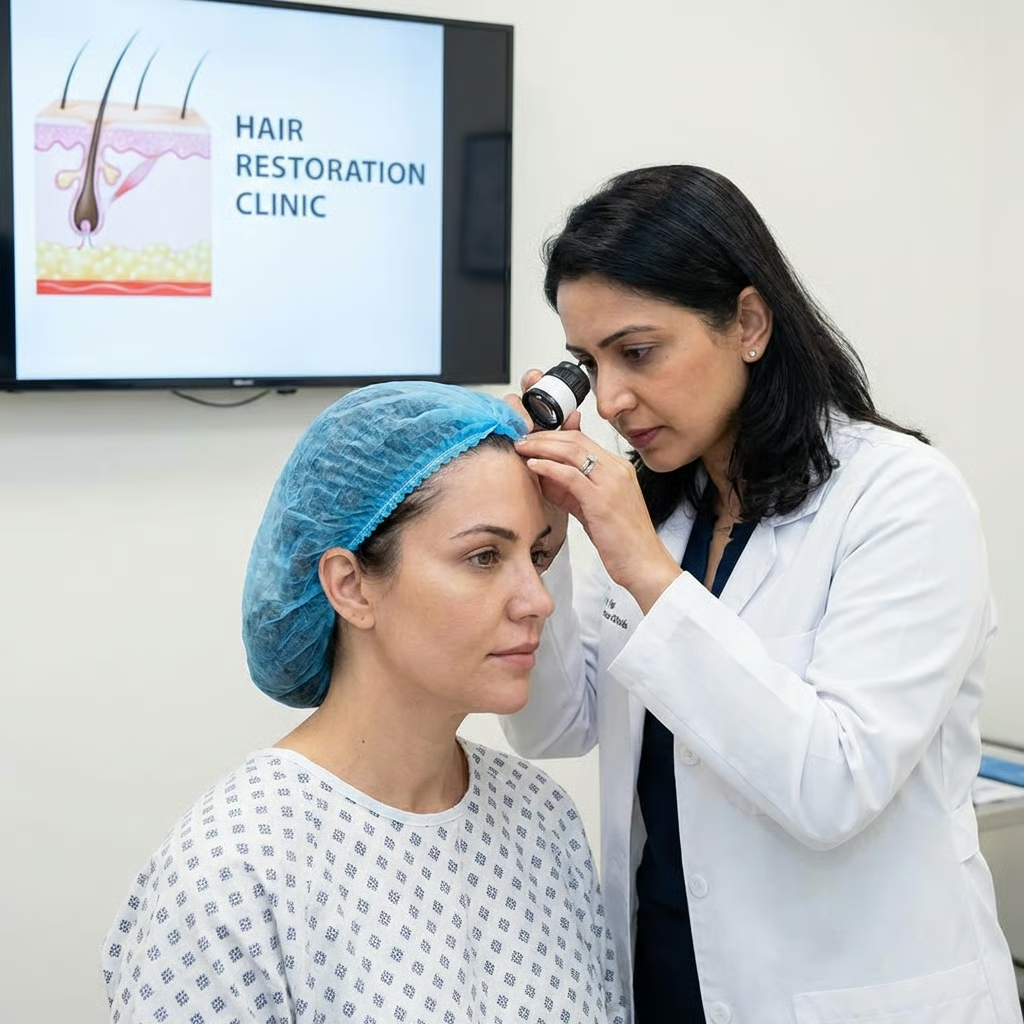
Maybe you aren’t ready for surgery yet. That’s totally fine! Hair restoration for women covers a massive spectrum of non-surgical treatments that are incredibly effective.
- Exosome Therapy: This is the big trend in 2026. These tiny “signaling cells” tell your dormant hair follicles to wake up and start growing again.
- Platelet-Rich Plasma (PRP): Using your own blood’s growth factors to thicken the hair shaft.
- Laser Therapy: Clinical-grade light devices that you can sometimes even use at home to maintain hair restoration for women.
The key is to start early. The sooner you look into hair replacement for women, the more “native” hair you have to save.
6. How to Choose Your Hair Replacement Journey
If you are feeling overwhelmed by the options, start by asking yourself one question: Do I want a permanent surgical fix or a non-invasive maintenance plan?
A surgical hair replacement for women is an investment. It’s a one-day procedure with a bit of a waiting game for the results (usually 6-12 months). Non-surgical hair restoration for women is more of a routine, like going to the gym for your scalp. Both are valid, and many women actually combine both for the best possible results.
7. The Emotional Payoff: Life After Restoration
The best part of my job is seeing the “After” photos—not just because the hair looks great, but because the look in the woman’s eyes has changed. When you find the right hair replacement for women, you stop checking the mirrors every five minutes. You stop worrying about overhead lighting in restaurants. You just live.
Whether you call it a hair transplant for women or simply “getting your groove back,” the goal is the same: feeling like the best version of yourself.
8. Final Thoughts: Don’t Wait for the “Perfect” Time
If you’ve been Googling hair replacement for women for months, this is your sign to take the next step. Consultations in 2026 are mostly digital and very private. You can get an AI-driven simulation of your results before you ever step foot in a clinic.
You deserve to feel confident. You deserve to love your hair. Explore the world of hair replacement for women and see just how far technology has come. The hair of your dreams isn’t just a possibility anymore—it’s a plan.
Hair Replacement for Women: Top 10 FAQ
Options range from non-surgical hair systems and toppers to permanent DHI transplants. Our AI simulator helps you choose the method that best restores your natural density and confidence.
Modern systems are bonded to the scalp, allowing you to swim and exercise. They use a micro-thin base that is much more natural and breathable than a traditional wig.
Yes, toppers are perfect for adding volume to the crown or parting. They integrate with your natural hair for an instant boost. Compare topper volume vs. transplant results on our platform.
Absolutely. Medical-grade systems are specifically designed for patchy dökülme, providing full coverage without needing surgery on an unpredictable scalp.
Typically every 4-6 weeks for rebonding and cleaning. High-quality hair replacement for women can last up to a year with the right care routine.
Yes, many women do this. We use AI to help you plan the transition, ensuring your scalp is healthy and your donor area is ready for a permanent restoration.
AI is essential for a natural look. It prevents you from choosing a system that is ‘too thick,’ which can look fake. We help you find the perfect balance for your age and face shape.
Modern lace bases are incredibly light and breathable. They are designed for active lifestyles, ensuring you feel comfortable whether you’re at the gym or in the office.
A hair system has a lower initial price but higher maintenance costs. A transplant is a one-time investment. Our simulator helps you calculate the long-term value of each.
Yes! With professional bonding and a realistic hairline design, your hair replacement for women will stay secure and look like your own hair, even in challenging conditions.