How Many Grafts Do You REALLY Need? See the AI Result Now.
Let’s be honest: when you start looking into hair restoration, the numbers thrown at you can feel like a high-stakes math problem you didn’t sign up for. You hear 2,000 grafts here, 4,500 there, and suddenly you’re wondering if you’re getting a transplant or buying bulk at a warehouse club. The question on everyone’s mind is always: How Many Grafts Do You REALLY Need? See the AI Result Now.
In 2026, we’ve moved past the “eyeballing it” phase of surgery. We have tools that can map your scalp down to the micron. So, grab a coffee, and let’s dive into the science of graft counting without the headache.

1. The Anatomy of a Graft: Why Numbers Aren’t Everything
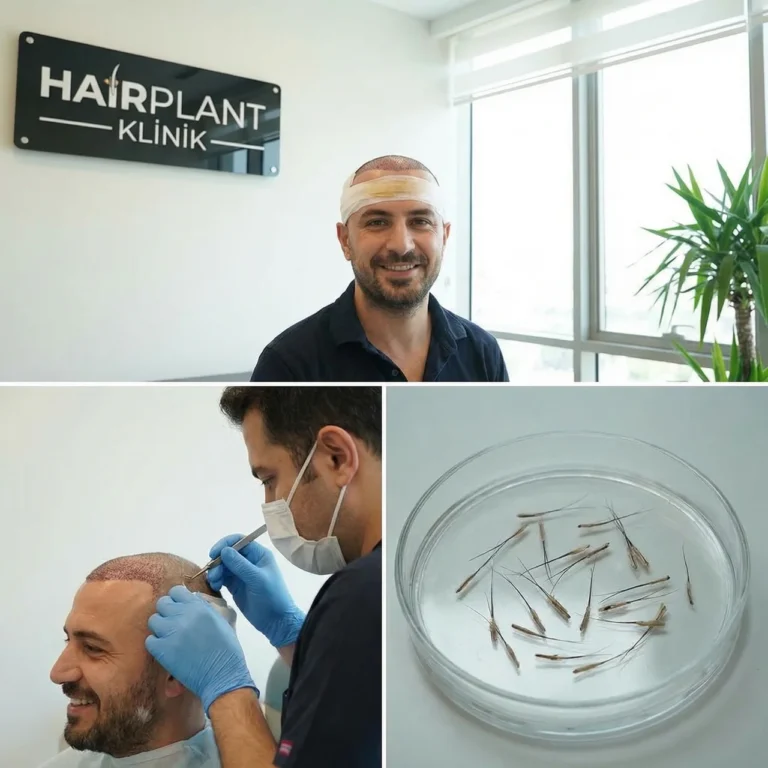
Before we get into the math, let’s clear up a huge misconception. A “graft” is not a single hair. A graft (or follicular unit) is a naturally occurring bundle that can contain anywhere from 1 to 4 hairs.
If you’re asking yourself, “How Many Grafts Do You REALLY Need? See the AI Result Now.” you should know that a patient receiving 2,000 grafts with an average of 3 hairs per graft will look much fuller than a patient receiving 2,000 grafts with only 1.5 hairs per graft. This is why AI analysis is so crucial—it counts the hairs, not just the holes.
2. The Norwood Scale vs. The AI Lens
For decades, we used the Norwood Scale (1 to 7) to estimate hair loss. While it’s a great baseline, it’s a bit like buying a suit that only comes in Small, Medium, and Large. It doesn’t account for your specific head shape, hair caliber, or donor health.
When you use an modern simulator to ask “How Many Grafts Do You REALLY Need? See the AI Result Now.“, the system looks at:
- Scalp Laxity: How tight is your skin?
- Contrast Ratio: Dark hair on pale skin requires more density than blonde hair on pale skin.
- Miniaturization: Which hairs are destined to fall out next year?
3. Breaking Down the Zones: Where the Grafts Go
Most people don’t realize that different parts of your head require different densities.
H2: The Frontal Hairline (The Frame)
This is the most critical area. AI models usually prioritize this because it frames your face. You might need 1,500 grafts just for a 2cm advancement of the hairline. If you’re looking for precision, you’ll ask: “How Many Grafts Do You REALLY Need? See the AI Result Now.” for the hairline alone.
H2: The Mid-Scalp (The Bridge)
This area connects the front to the back. It needs enough density so you don’t look “see-through” under office lights.
H2: The Crown (The Vertex)
The “black hole” of hair transplants. Because the crown has a swirl pattern, it requires a surprising number of grafts to look full. This is often where patients are shocked by the answer to “How Many Grafts Do You REALLY Need? See the AI Result Now.“
4. Why AI is Better Than a Human Estimate
Imagine a surgeon looking at you for 5 minutes. Now imagine an AI scanning your scalp for 60 seconds, comparing it to 10 million successful outcomes.
The AI can calculate your Donor Capacity. This is the “bank account” of your hair. If you have a total of 6,000 lifetime grafts available and you use 5,000 in your first surgery at age 25, you are in trouble at age 40. The AI ensures we leave enough in the bank for the future. That’s why the tool “How Many Grafts Do You REALLY Need? See the AI Result Now.” is a safety feature, not just a marketing trick.
5. The “Illusion of Density” Trick
You don’t actually need 100% of your original hair back to look like you have a full head of hair. Most humans look “full” at about 50% of their original density.
Modern surgeons use AI to place grafts in a “staggered” pattern that mimics nature. By focusing on the first 3 centimeters of the hairline and tapering back, we save you money and donor hair. When you see the prompt “How Many Grafts Do You REALLY Need? See the AI Result Now.“, the result might be lower than you expected—and that’s a good thing! It means efficiency.
6. Real Patient Case Study: Meet “Mark”
Mark was a Norwood 4. He thought he needed 5,000 grafts. He was ready to pay for 5,000. We ran the simulation: 3,200 grafts. Why? Because Mark had coarse, wavy hair. The AI realized that his hair texture provided so much coverage that 5,000 would have been a waste of his donor supply. He saved thousands of dollars and kept 1,800 grafts in reserve for his 50s.
7. Conclusion: Science over Guesswork
Don’t let a clinic pressure you into a “Mega Session” without seeing the data. Hair restoration is a lifelong journey, not a one-day sale.
If you’re still sitting there wondering about your specific situation, the answer is just a scan away. Stop guessing and start planning. Visit our simulation tool and finally answer that burning question: How Many Grafts Do You REALLY Need? See the AI Result Now.
How Many Grafts Do You Need? FAQ
It depends on the size of your balding area and the density you want. Typically, a natural look requires 35-50 grafts per square centimeter. Our AI simulator calculates this area precisely for you.
One graft contains 1 to 4 hairs. If a clinic talks about “hair count” instead of “graft count,” be careful—they might be inflating the numbers. Always plan your surgery based on grafts.
Huge sessions carry higher risks of graft failure. Often, 3,000 well-placed grafts look better than 5,000 poorly placed ones. Simulation helps you find the “sweet spot” for safety and aesthetics.
Usually between 1,500 and 2,500 grafts. The exact number depends on your face shape and the level of recession. You can test different hairline heights on hairsimulate.com right now.
Every doctor has a different approach. Some prioritize cost, others density. Our independent AI simulation gives you an unbiased baseline to compare these quotes fairly.
If you have limited donor hair, you must prioritize. We can simulate how to use a smaller graft count for the front and SMP (pigmentation) for the rest to achieve a full look.
No. Over-harvesting can ruin your donor area. Strategic placement and natural design are far more important than just hitting a high number of grafts.
The crown requires high density, often 2,500+ grafts. Since donor hair is limited, many use simulation to see if SMP is a better, more cost-effective option for the vertex.
Yes! By uploading your photos to our platform, you get a digital report showing the projected density and the estimated number of grafts needed for your specific case.
It prevents you from paying for grafts you don’t need or undergoing a second “fix-it” surgery. Knowing your exact requirements makes you a smart, prepared patient.